Dive Brief:
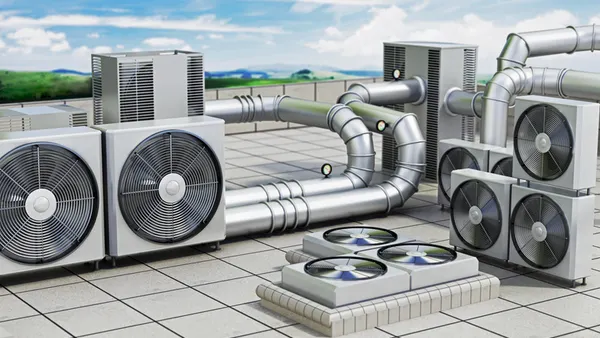
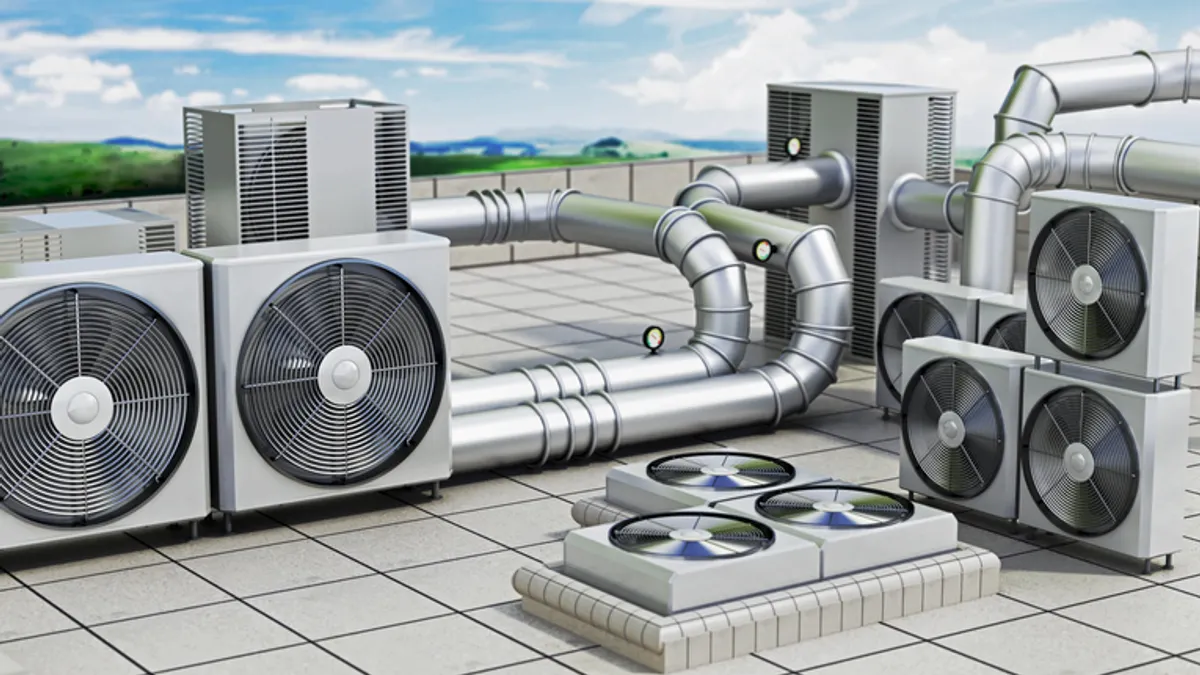
- A bipartisan bill introduced in the House last week by Reps. Don Beyer, D-Va., and Brian Fitzpatrick, R-Pa., seeks to improve the indoor air quality in commercial buildings by giving owners tax credits for assessing the indoor air quality of their facilities and upgrading their HVAC and air filter systems.
- “The improved HVAC and air filtration systems necessary to improve air quality can be expensive to install and maintain,” Beyer said in a statement. “This bill would incentivize building owners to perform IAQ inspections and upgrades.”
- The incentives would increase for owners that hire contractors that comply with the prevailing wage and apprenticeship requirements in the Inflation Reduction Act. “It’s how we improve public health and grow our workforce at the same time,” said Fitzpatrick.
Dive Insight:
The Airborne Act offers commercial building owners two incentives. One is a tax credit worth $1 per square foot for conducting property IAQ assessments, not to exceed the cost of the assessment. The other is a tax credit for meeting either ASHRAE Standard 62.1, which sets minimum indoor air quality levels, or ASHRAE Standard 241, which seeks to reduce the spread of airborne pathogens by controlling aerosols through airflow rates and filtration.
By meeting one of these standards, owners can get credits equal to $5 per square foot for upgrading the air filters in their ventilation systems and credits equal to $50 per square foot for HVAC system updates. Total tax credits can’t go above half the project cost.
The credits are increased to $25 and $250 per square foot, respectively, for owners who work with contractors whose technicians meet the apprenticeship and prevailing wage standards.
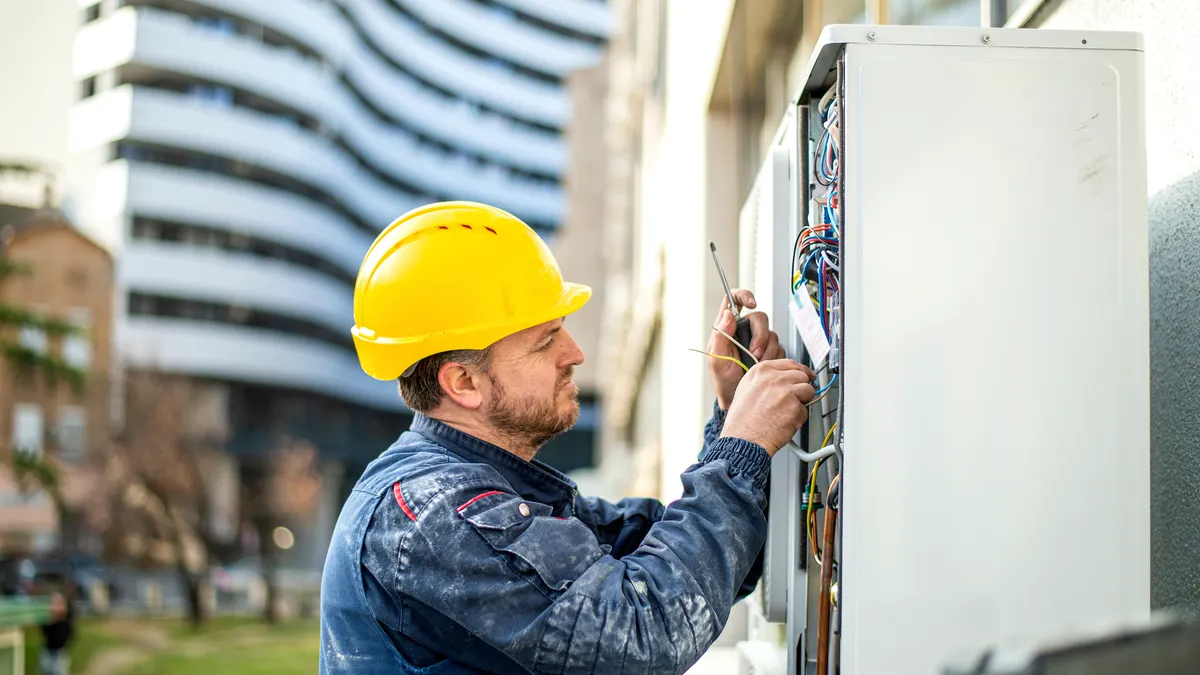
“Qualified professionals are … the skilled, trained and certified workers who will perform assessments [and] upgrade HVAC systems,” the International Association of Sheet Metal, Air, Rail and Transportation Workers, or SMART, said in a statement supporting the bill.
To give building owners recognition for meeting the standards, the bill would create a voluntary certification program administered by the U.S. Department of Energy and Environmental Protection Agency. Nonprofits would be eligible for certification as well. For public properties, agencies would be able to transfer their credits to private entities that carry out the upgrades.
The bill has been introduced in the House twice before, in 2022 and 2024. In both cases the bill stayed in the Ways & Means Committee without a vote.
The latest version of the bill adds the ASHRAE Standard 241 as an option; previous versions included only the ASHRAE Standard 62.1. Adding the standard for controlling aerosols was something the advocacy organization Action Network pushed for.
“[The 62.1] standard alone is not enough to greatly reduce the risk of airborne disease spread indoors,” the group said in a 2024 call to action in support of the bill.
Compared to 62.1, the 241 standard requires higher ventilation rates. In convention centers, for example, the 62.1 standard requires an outdoor air ventilation rate of 2.8 liters per second, or lps, compared to an equivalent clean airflow of 30 lps in the 241 standard, a rate ratio differential of 10.7, according to a 2023 analysis of the standards in a post on the It’s Airborne blog by sustainability engineer Joey Fox.
For offices, the 62.1 standard requires an outdoor air ventilation rate of 8.5, compared to an equivalent clean airflow of 15 in the 241 standard, a rate ratio differential of 1.8, according to the analysis.
ASHRAE President Bill McQuade says his organization is supporting the bill. “This legislation aligns with ASHRAE’s focus on healthy buildings and indoor environmental quality by providing important incentives for building owners and operators to assess and invest in system improvements that advance public health and improve productivity,” he said in a statement.