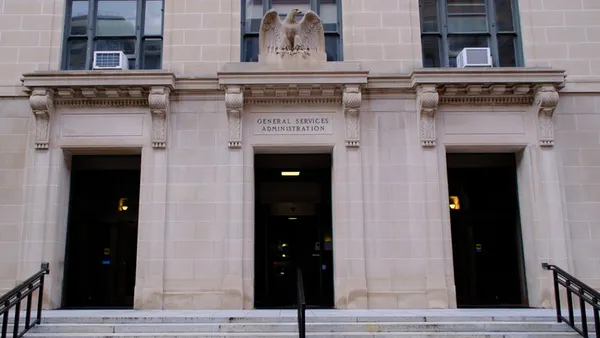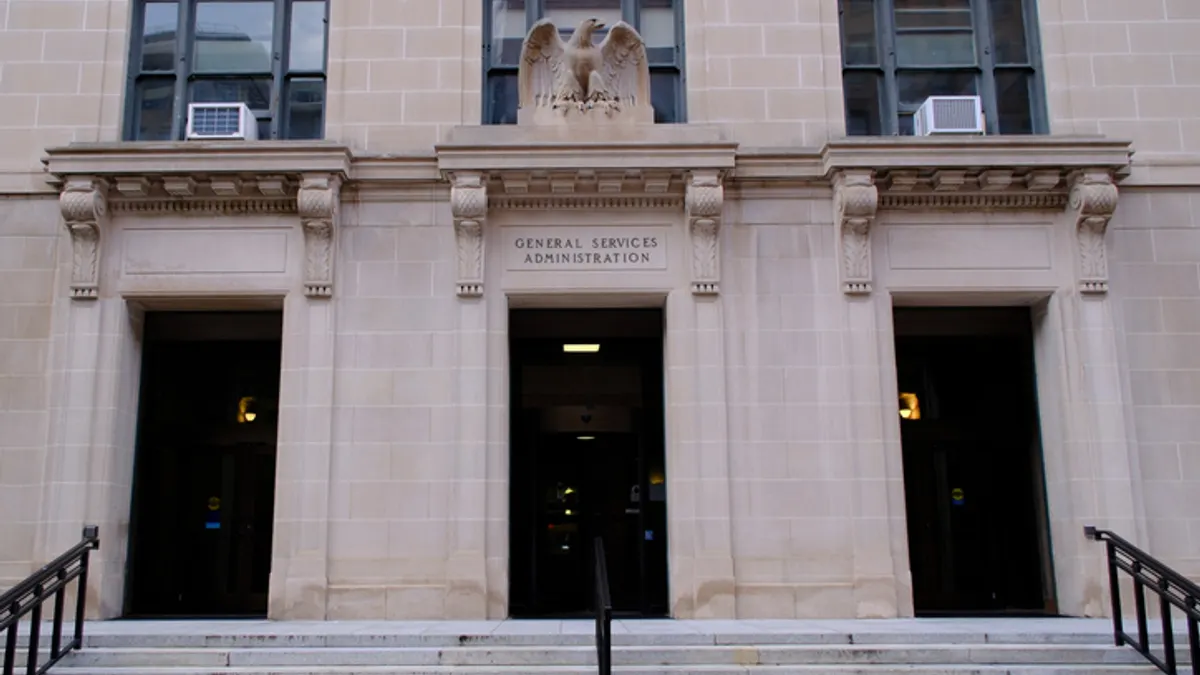
The federal government’s real estate arm has spent $133 million on building studies in recent years but can’t locate most of them and has no systematic way of extracting data from them should it need to, the watchdog of the U.S. General Services Administration says.
“The issues certainly make it harder for [the agency] to have a comprehensive picture of the needs and problems facing its portfolio,” Brian Gibson, the GSA’s deputy assistant inspector general for real property audits, said on a Federal News Network radio program this week.
GSA’s inspector general has congressionally mandated authority to conduct investigations into the agency. It recently completed an audit that found the agency’s property operations division, called the Public Building Service, has only uploaded about 20% of the reports it commissioned between 2019 and 2024 into a database that organizes the data in the reports for analysis and decision-making.
PBS, which is part of GSA’s effort to manage the federal government’s sprawling real estate portfolio, commissions the reports to help inform the agency as it decides which buildings to repair or upgrade and which should be sold or otherwise disposed of. The Government Accountability Office last year found GSA has a $370 billion maintenance backlog on its portfolio of 277,000 properties. Other estimates are smaller than that. In testimony before Congress last year, GSA said the backlog was closer to $26 billion.
“Building studies fill a critical need for PBS’ management and oversight of its real property portfolio,” Michelle Westrup, GSA’s regional inspector general for auditing, said on the program. “We found that PBS wasn’t comprehensively tracking or monitoring these building studies.”
PBS contracts with consultants to conduct the studies, which are intended to give guidance on the condition of buildings, evaluate options for improvements and provide other guidance.
Westrup said PBS was unable to provide a list of the studies it had commissioned and had to cobble one together when asked for an accounting of the reports, she said.
The list the agency created appeared to be incomplete and contained duplicate information.
The agency, through its Office of Portfolio Management, has a policy for the studies to be uploaded into a system called the building assessment tool, but based on a test the inspector general conducted on a sample of reports, only about 20% had been put into the system.
“They were unable to provide us even a listing of studies that we could rely upon for any further testing,” Westrup said. “They couldn’t provide us with any guidance on how they use the building studies or requirements such as the system for tracking and monitoring them.”