A U.S. Department of Energy policy shift in January that ended a safety directive has advocates concerned about the safety of plumbers, metal workers and other workers at the country’s nuclear facilities.
DOE Secretary Chris Wright in a January 9 memo eliminated a radiation exposure directive called ALARA — “as low as reasonably achievable” — in response to an executive order by President Donald Trump last year to speed development of nuclear facilities.
“Beginning today, my Administration will [institute reforms to] produce lasting American dominance in the global nuclear energy market,” Trump says in the order.
In the memo, Wright said the administration has concluded that ALARA is based on a flawed risk calculus that adds unnecessary costs to projects.
Current “radiation protection frameworks … impose excessive economic and operational burdens without corresponding health benefits," said Wright, referencing a finding from a 2025 Idaho National Laboratory report.
ALARA has been controversial since it was introduced in the late 1970s and codified by DOE in 1993.
It’s based on a research thesis called the Linear No-Threshold model that finds that, since any exposure to radiation is bad, executives at facilities in which workers could be exposed should take steps to reduce exposure to as little as possible. Critics call it excessive because it leads to measures that can go beyond what people would be exposed to naturally, from the sun, for example.
"The argument against ALARA is that in a lot of cases it's been mismanaged and used overly stringently in ways that go beyond the 'reasonable,'" Kathryn Huff, a professor of plasma and nuclear engineering at the University of Illinois at Urbana-Champaign, said in a National Public Radio article in late January.
Eliminating ALARA doesn't mean safety standards go away. DOE, the Nuclear Regulatory Commission and other agencies whose jurisdiction includes nuclear facilities set regulatory limits on exposures; ALARA is a directive used by DOE and NRC that sits on top of those limits directing facilities to go further if it’s possible.
In practice, this means reactors could be constructed with less concrete shielding, and workers could work longer shifts, potentially receiving higher doses of radiation, Tison Campbell, a partner at K&L Gates who previously worked as a lawyer at the NRC, said in the NPR piece. “The result could be lower construction costs, saved employment costs and things like that," he said.
“They’re pulling away from what’s kept us safe all these years,” Bradley Clawson, a senior operator at Idaho National Laboratory who retired in 2021 and now sits on a board advising the Centers for Disease Control on worker radiation exposure, told nonprofit publication High Country News last week.
When he was at Idaho National Laboratory, Clawson said, he handled canisters of leftover fuel as part of the work he did. “The people not doing the job are the ones calculating the risk,” he said.
Edwin Lyman, director of nuclear power safety at the Union of Concerned Scientists, told NPR that eliminating ALARA, along with other measures DOE is taking, leaves him worried that safety is being compromised for expediency.
"They're taking a wrecking ball to the system of nuclear safety and security regulation oversight that has kept the U.S. from having another Three Mile Island accident," he said.
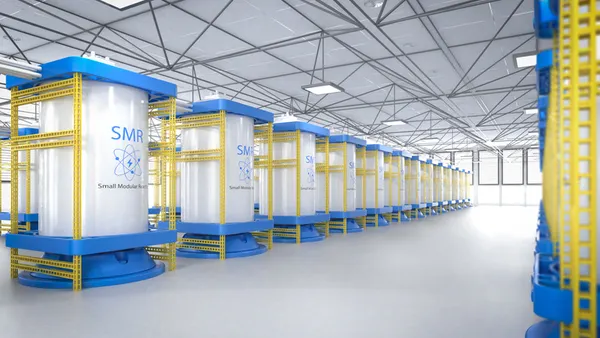
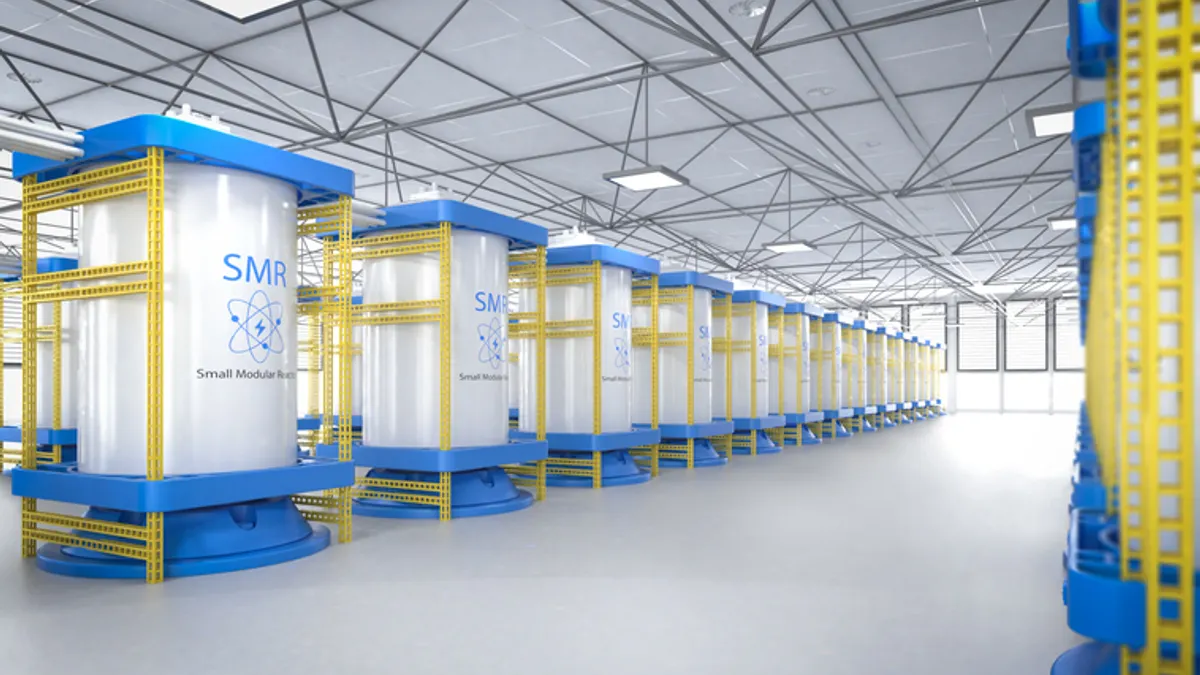
As part of its effort to speed development of nuclear plants, the administration last year began fast-tracking a handful of new-generation small modular reactors that are backed by hyperscalers like Amazon, Meta and Google. The reactors are designed to be mass produced and collocated with data centers, directly powering the sites, according to an NPR article published in December.
"Accelerating nuclear energy development will be critical to strengthening our nation’s security, meeting future energy demands, and addressing climate change,” Brandon Oyer, head of energy and water in the Americas for Amazon Web Services, said last year when his company, as part of a group, pledged to back new nuclear projects.
He said Amazon has invested more than $1 billion in nuclear projects in the last year.
Critics say the small scale of the new reactors being built doesn’t reduce the risk.
“Small modular reactors are just smaller nuclear plants that could come with the same impacts as large nuclear power plants, only multiplied and spread across our neighborhoods,” says a fact sheet by Food & Water Watch released last year.
“It isn’t just the guys handling plutonium who need to worry about radiation — every US nuclear worker, from the plumbers patching leaks to the janitors mopping floors, has a reason to be on guard,” a Futurism article on the controversy says.
DOE didn’t immediately respond to a request for comment, but in a response to NPR, it said its actions aren’t compromising safety.
"The reduction of unnecessary regulations will increase innovation in the industry without jeopardizing safety," the agency said.