Energy service companies and those offering energy-as-a-service are seeing an upswing as building operators drive demand for decentralized and resilient energy solutions in pursuit of long-term cost savings and improved operational efficiency, reports show.
Both energy service and energy-as-a-service companies own the upgraded infrastructure they install on behalf of building owners. Energy service companies tend to work mostly with schools and other public institutional owners and get paid from the energy savings generated. EaaS companies tend to work with private building owners and charge a recurring subscription fee in return for the upgrades.
The U.S. energy service market was valued at $42.7 billion in 2025 and is expected to grow to $101.2 billion in 2035, according to a report by Global Market Insights.
The energy partners take care of procurement, maintenance and performance upgrades, enabling businesses to focus on core operations. “The lack of upfront investment and the support of seasoned operators make it an easy choice for organizations trying to juggle budgets, regulations, and environmental promises,” the GMI report said.
ABB, Ameresco, ENFRA (formerly Bernhard Energy Solutions), Budderfly, ENGIE, Honeywell, Schneider Electric, Johnson Controls and Siemens are among the big companies in the space.
The companies are deepening their offerings by integrating new digital tools and energy efficiency technologies into their platforms, including IoT-based sensors, real-time system checks and analytics that help customers fine-tune energy use and avoid maintenance surprises. Many of the companies work with renewable energy and storage specialists to offer additional bundled offerings.
Here’s a look at recent projects from two energy service companies and what a third company is doing to expand its portfolio of business.
Ameresco: modernizing historic facilities
Ameresco on Monday announced substantial completion of a $7.8 million design-build project for Tacoma Public Schools in Washington to modernize the HVAC system at McKinley Swing School.
For the project, Ameresco navigated mandates in the local jurisdiction’s historical registry to ensure upgrades were sensitive to the school’s historic character and preservation guidelines. It undertook the work while enabling portions of the building to remain occupied during construction.
In addition to modernizing the energy infrastructure, the project supported Pierce County’s policy goals that require 30% engagement of local contractors and participation by small and minority/women-owned busineses, Ameresco said in a release.
“By replacing the aged boiler system with a modern HVAC system, we’re creating a more comfortable and reliable learning environment so students and staff can focus on what matters most,” Greg Stidham, project manager at Tacoma Public Schools, said in a statement. “Collaborating with Ameresco allowed our district to plan carefully, prioritize student needs, and progress the work with minimal disruption to learning.”
The company also recently completed a contract for Pittsylvania County, Virginia, that delivered energy efficiency and infrastructure upgrades at the county sheriff’s office. The goal was to deliver cost savings while enhancing the building’s performance, reliability and sustainability, the company said.
That project sought to deliver guaranteed energy savings while preserving the historic character of the building, which was originally constructed in the 1930s, during the Great Depression. The company said it implemented a variable refrigerant flow heat pump HVAC system, replaced windows with double-pane units that complemented the architecture and made repairs to interior wood and plaster surfaces that had been damaged by long-term water infiltration.
“This latest project reflects Ameresco’s commitment to advancing energy efficiency and helping our public-sector partners achieve their energy and sustainability goals, while also respecting historic architecture,” said Peter Christakis, president of East USA & Greece and project risk at Ameresco. “By leveraging the ESPC model, we were able to deliver critical infrastructure upgrades with guaranteed savings, while minimizing disruption to county operations, helping strengthen building performance and support the services the community relies on.”
ENFRA: Upgrading healthcare systems
Baptist Health, the largest not-for-profit health system in Kentucky, entered into a 30-year energy-as-a-service partnership with ENFRA earlier this year that’s intended to deliver comprehensive energy system modernization, cost savings and sustainability improvements at eight hospitals across Kentucky and southern Indiana.
ENFRA will operate, maintain and optimize Baptist Health’s existing chilled water and steam systems while deploying efficiency and resiliency upgrades. The partnership is expected to generate substantial savings over the 30 years while reducing carbon emissions, according to a Feb. 17 release.
“Through our Energy-as-a-Service model, we are empowering Baptist Health to modernize its facilities, reduce carbon emissions, realize material P&L benefits and most importantly, redirect capital resources to advance the system’s mission,” ENFRA Executive Vice President Frank Ferramosca said in the release.
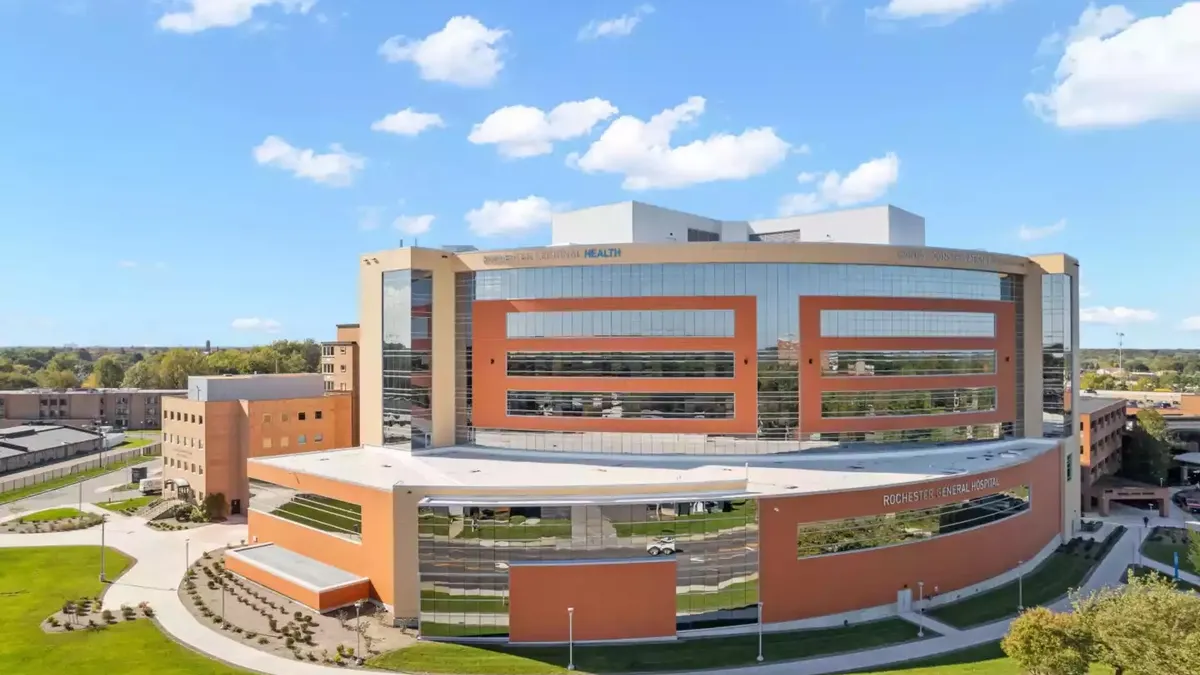
ENFRA also signed a 30-year EaaS agreement with Rochester Regional Health to modernize energy infrastructure across nine hospitals with the goal of generating $6.9 million in first-year utility cost savings and more than $350 million in savings over the life of the deal.
The effort includes installation of solar arrays, upgrades to air-handling and terminal units, enterprise-wide optimization of heating and cooling supply-side systems and the expansion of EV charging capabilities.
The deal is also expected to reduce RRH’s purchased electricity by 52.5%
Budderfly: expanding from restaurants
Budderfly has been expanding from its roots helping chain restaurants and convenience stores to other types of small and mid-sized businesses. It’s growing its portfolio of technologies, with 21 patents filed and four patents granted last year. It’s expanding its proprietary systems to include advanced HVAC control methods, distributed energy coordination systems, intelligent load balancing and behind-the-meter microgrid controls, the company said in a release.
Earlier this year it expanded its debt facility to $550 million to support its growth, pv magazine reported. It’s using that funding to secure agreements with restaurants, big box retail and small-scale manufacturing facilities, CEO Al Subbloie said in an interview.
“We’re still doing restaurants, multi-locations, convenience stores [and] manufacturing is now added,” he said.
As the company expands across sectors, it’s rolling out battery storage and virtual power plant technologies that Subbloie says can be aggregated and sold back to utilities or other customers that need it.
“We’re trying to have that battery repurpose the concept of the creation of a new kilowatt hour,” he said. “Whether that [kW] came from a solar panel or a higher-efficiency HVAC unit, however it got there, it’s got the same value as a new kilowatt-hour.”
As the company implements more battery storage into its overarching network, it will then be able to sell excess capacity to other facilities, like data centers, that need it, he said.
“If we have so much capacity in a world where demand exceeds supply, it’s even hard to predict all the ways people are going to want to buy it and sell it,” he said.