Downstream impacts of the Iran conflict on commercial real estate are mainly still to come, economists say. For facilities, especially those in states with deregulated energy markets and have multi-year energy contracts, impact from the conflict will generally be delayed as energy prices wind their way across an extensive contractual and regulatory pathway, says an executive at a building energy management company.
The main short-term disruptor for commercial properties, on the development, investment and brokerage side, are interest rates that rise along with energy prices and broader inflation, says an analysis by Marcus & Millichap.
“Six more months of what we're seeing in the Middle East, and the effect on interest rates and inflation could start to disrupt” commercial property, Hessam Nadji, Marcus & Millichap CEO, said in mid-March.
Interest rates have experienced little change since the conflict began, Federal Reserve data show.
Even if oil starts flowing freely through the Strait of Hormuz tomorrow, after weeks of tankers sitting idle because of the Iran conflict, energy prices will likely keep rising and stay high for months, Nobel-winning economist Paul Krugman said on Tuesday.
“It takes four to six weeks for oil passing through the Strait of Hormuz to reach major markets,” he said on The Beat. “So all this time, the world has been living on oil that was already in transit — has not been affected by the war. But that runs out now.”
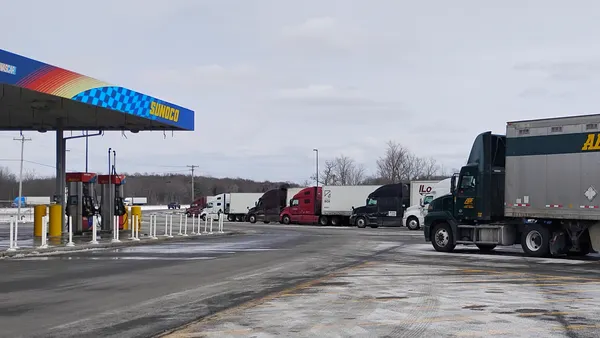
At the pump, the price for a gallon of gas has risen about $1 in the past month. For diesel, which is important to facilities that rely on it for back-up power generation and to operate fleets and heavy machinery, the price has risen more than $1.50.
“Diesel is a much bigger deal,” Krugman said. “People should be talking about that…. In a way, $4 a gallon of gas is less than half the problem; the effect on diesel fuel — every truck runs on diesel. All of the business activity runs on diesel…. This is the greatest shock to global energy markets ever.”
From an operations standpoint, separate from the immediate impact of higher diesel prices, higher energy costs shouldn’t hit right away because of the terms of the energy contracts that facilities enter into and the regulatory constraints utilities face, Tom Flynn, chief administrative officer and general counsel at Budderfly, said in an interview.
“The whole rate setting process with utilities and state regulators [is a hurdle] before [prices] would start to trickle down to … electric bills,” he said.
In states with deregulated energy markets, including big states like California, Illinois, New York and Texas, contracts can come with terms of two or three years, so facilities’ rates are locked in for some time. “The suppliers have taken that risk,” he said.
In New England — a big natural gas area — many facilities have longer-term gas supply arrangements, he said. “So if there were an impact, some of that is mitigated for a period of time,” he said.
More broadly, energy costs have been on an upswing separate from the conflict for a while, Flynn said. The growth of data centers supporting the surge in AI computing and the influx of companies reshoring their manufacturing operations in the United States have been fueling higher prices.
“Our view is the cost of electricity is going to outstrip inflation,” he said. “It has been and will continue to do that.”
To get ahead of future cost increases, facilities with inefficient HVAC and other building systems can do a lot to improve their energy posture, he said.
Flynn estimates that many small and mid-sized businesses are using 30% more energy than they would if they took a few small efficiency measures and, if needed, upgraded equipment.
“When we go on to the average roof, there are rooftop units that are years old,” said Flynn, whose company, through its energy-as-a-service model, assumes responsibility for its clients’ utility spending and the capital risk of energy upgrades. “They’re about 50% less efficient than a brand new ultra high efficient HVAC unit that you might put in to replace them.”
For many small and midsized facilities, the 30% inefficiency they’re struggling with can be partly offset through small steps like switching out older LEDs for newer LEDs, changing HVAC filters regularly and better managing temperature set points and setbacks.
“You can get a meaningful pickup by simply” doing these small things, he said. “A majority of the time, what we see is stuff that’s in really bad shape that, just with some basic maintenance, could be performing better from an energy use standpoint…. HVAC units, filters, people not replacing filters … not taking care of compressors and other systems — basic maintenance.”
In cases where more significant intervention is needed, facilities have options for getting equipment upgrades at little or no capital outlays if they work with EaaS or energy service companies, or ESCOs, that own the new equipment in exchange for part of the revenue stream that’s created from the energy savings.
These arrangements “allow [facilities] to avoid capital outlays and generate some energy operating savings,” he said. “Anything that’s happening today geopolitically just continues to emphasize the importance of doing these things.”