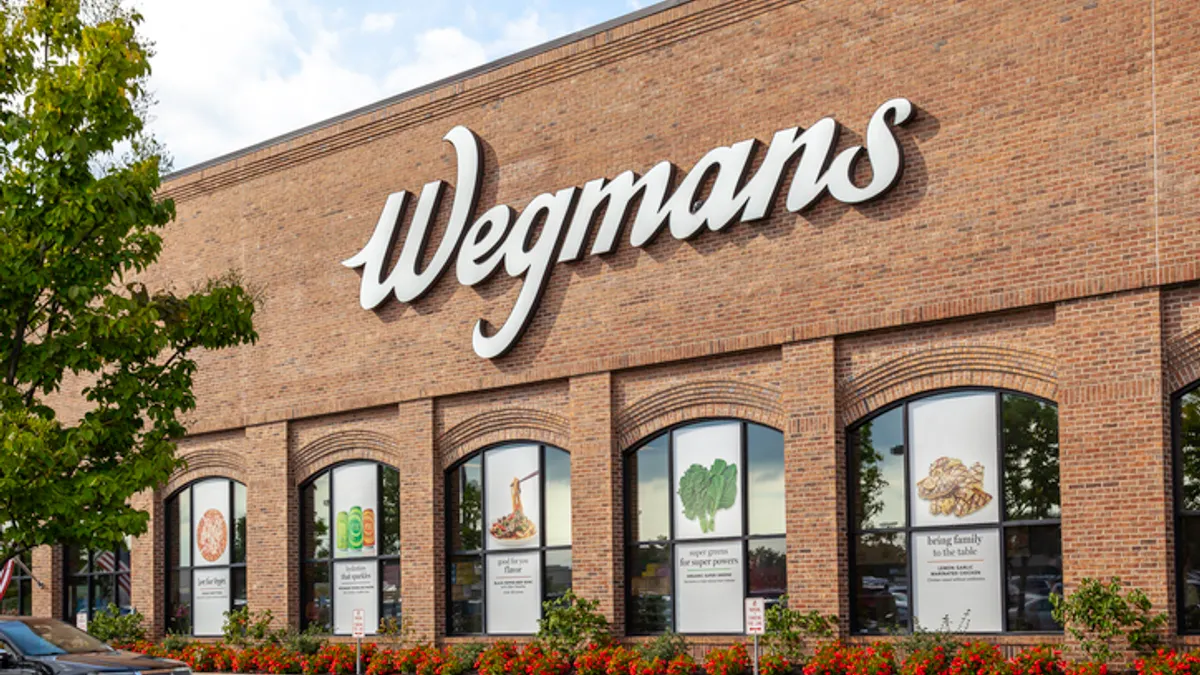
Regional grocery giant Wegmans is recording the biometric data of employees and customers in its New York City stores in an expansion of a program that only collected employee data when it started, Gothamist reported on Saturday.
The data helps “protect the safety and security of our patrons and employees,” the company says.
Biometric data comes from eye, voice, fingerprint and other scans. Wegmans is collecting data from facial recognition scans and might also use of eye scans and voiceprints, according to a sign notifying people who enter the stores about its data collection policy.
“We should be able to shop freely without data being saved on us,” Blaze Herbas, a shopper, told Gothamist. Herbas said she plans to stop shopping at the store.
In an email statement, the company says its use of the scans is limited. “In a small fraction of our stores that exhibit an elevated risk, we have deployed cameras equipped with facial recognition technology,” Tracy Van Auker, public relations manager in Wegmans’ community engagement and communications unit, writes. “This technology is solely used … to identify individuals who have been previously flagged for misconduct.”
Increased use of scans
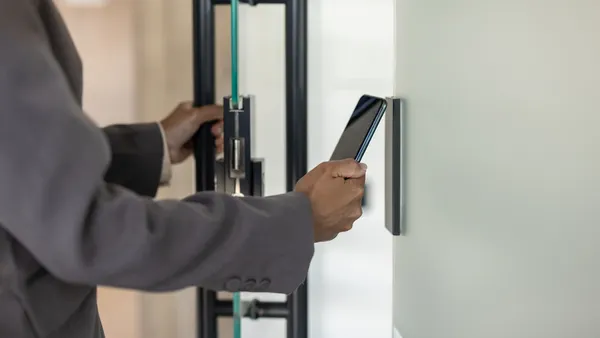
Companies are stepping up their use of biometric data collection. JPMorgan, for example, is requiring anyone who works in its new headquarters building to allow the company to collect biometric data on them. The 60-story, 2.5 million-square-foot building on Park Avenue in New York CIty opened late last year,
JPMorgan’s use of the scans comes after a high-profile security incident rocked the city. Four people were killed by a shooter who was trying to reach offices of the National Football League at 345 Park Ave.
The use of biometric scans for building security will raise data management issues that are typically handled by organizations’ HR, legal and IT teams, privacy experts say.
Even security cameras, to the extent they collect and store data on people’s identities, can raise biometric-related privacy issues, Jeremy Gottschalk, a plaintiffs lawyer and CEO of Marketplace Risk, said in an interview.
“With AI-assisted cameras, you’re on the edge [of biometric privacy], because you’re using physical attributes,” he said.
The collection and use of biometric data raises privacy concerns that can exceed the concerns of the collection and use of other types of data — like names and numbers — because biometric data can’t be changed.
“Once compromised, [biometric markers] cannot be replaced like a password or badge,” Biometric Update says in a post. “Biometric identifiers are immutable.”
One of Wegmans competitors in the city, Fairway, has been using biometric scans since 2023 at at least one of its New York City stores, so the practice isn’t new to the grocery industry in the city.
New York has data privacy laws on the books, but New York City Councilmember Shahana Hanif introduced legislation in 2023 that would address the use of facial recognition and other types of biometric surveillance by private businesses and landlords more specifically.
“It’s time our Council takes action to protect our communities from the constant overreaches of the expansive surveillance state,” Hanif said when introducing the legislation.
The bill is still under consideration.
Editor’s note: We have updated this story with a statement from Wegmans.