Dive Brief:
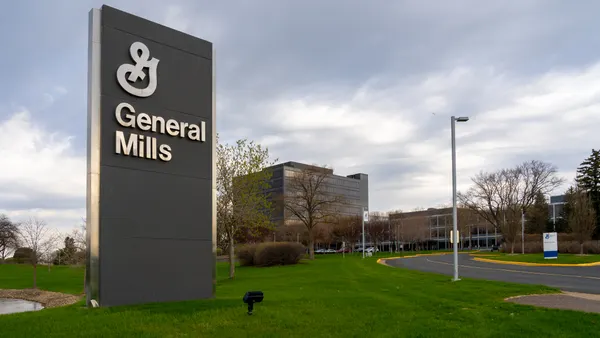
- General Mills has entered a 25-year energy services agreement with Unison Energy to implement an on-site combined heat and power system at the global food giant’s manufacturing plant in Hannibal, Missouri, expected to save over $30 million over the agreement’s life cycle, Unison announced Tuesday.
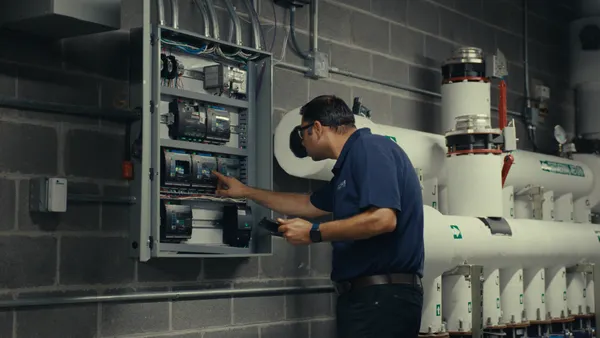
- The system is designed to provide approximately 90% of the facility’s annual electric load and approximately 70% of its steam load, with Unison Energy handling its financing, design, construction, ownership, operation and maintenance, the company said.
- “By aligning our long-term Energy Services Agreement with General Mills’ utility needs and sustainability goals, and by partnering with Hannibal Board of Public Works to develop a mutually beneficial business solution, we have created a blueprint for reliable, cost-effective, and low-carbon energy solutions,” Unison Energy CEO Mariko Meier said in a statement.
Dive Insight:
The plant is one of General Mills’ largest manufacturing sites. The on-site CHP system will feed low- emissions power and greenhouse gas-free steam into the plant’s power and steam networks to reduce emissions while delivering utility cost savings, Unison Energy said in a release.
The agreement provides General Mills with a predictable, long-term energy supply, with rate escalation fixed at 2.5% annually — significantly lower than projected utility increases, Unison Energy said. The project is expected to result in more than $300,000 in energy savings in the first year.
The CHP is also expected to reduce the facility’s Scope 1 emissions by about 57% and total site emissions by approximately 28% per year, according to the release.The reduction accounts for an estimated 5% of General Mills’ Scope 1 footprint across its global supply chain.
The agreement is the result of collaboration between General Mills, Unison Energy and the Hannibal Board of Public Works, which worked together to develop a dedicated standby framework for on-site generation, the release states.
The deal will compensate HBPW for maintaining capacity and includes performance and outage provisions that help create “a strong example of a public-private partnership that secures long-term cost and environmental benefits for General Mills while ensuring the local utility and city government remain financially whole,” Unison Energy said.
“This project exemplifies the strength of like-minded, public-private collaboration, to create a sustainable solution that will deliver reliable, efficient energy,” Daren Kaiser, global energy strategy leader for General Mills, said in a statement. “These forward-thinking organizations developed a plan that will allow us to balance the challenge of reducing emissions and adding needed power to the grid.”