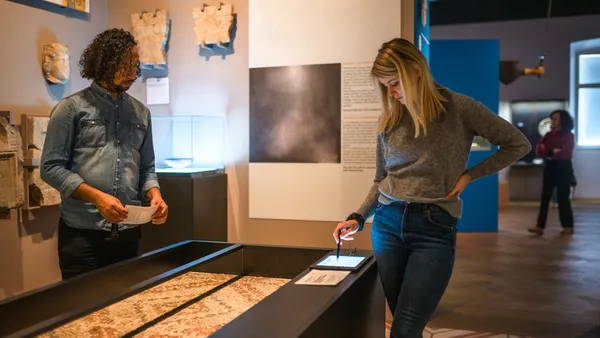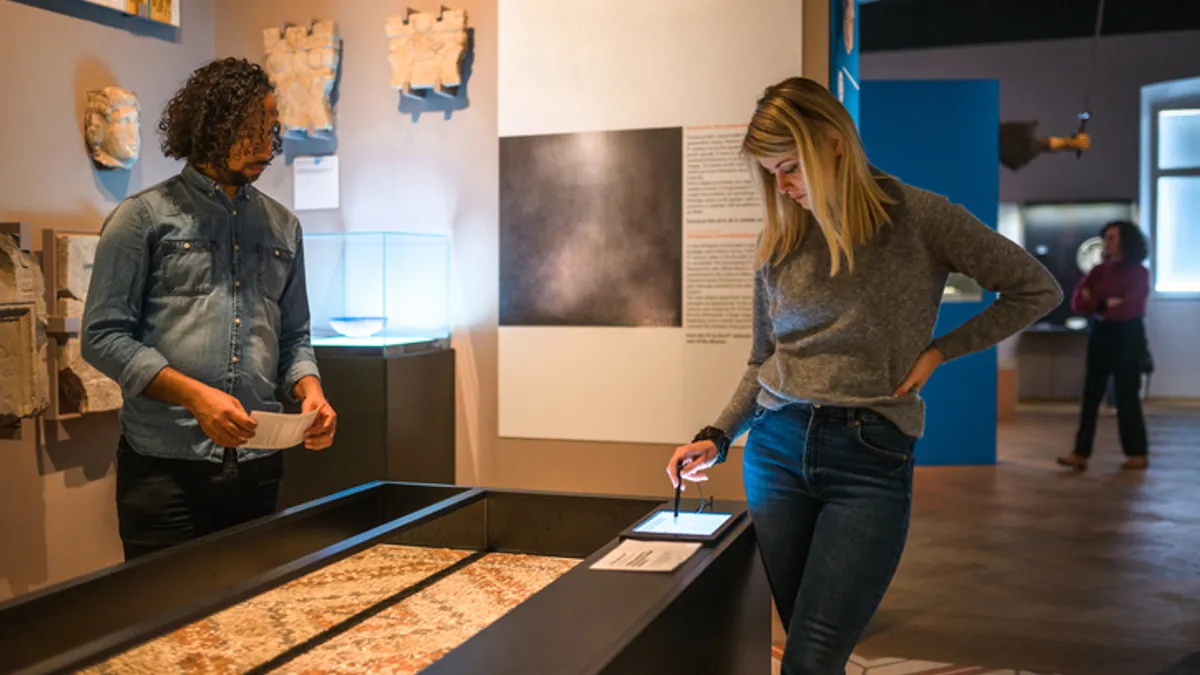
Faulty HVAC systems and other building problems are putting artifacts at risk at almost 80% of the roughly 17,000 state, local and private museums in the United States, the Government Accountability Office says in a report to Congress.
“Systems like heating, cooling, and ventilation … are important to protecting a collection since fragile items may be vulnerable to humidity,” the watchdog agency said in a blog post about the report, released this week.
Water damage is a big risk to collections because many museums are in buildings that are under preservation constraints and lack funds to make repairs without affecting the historic integrity of the building, says the report, based on a survey of public and private museum officials and more than a dozen site visits.
“One respondent wrote that unregulated temperatures and roof leaks threatened not only objects in their collection, but also the building itself, which they consider part of their collection,” the report says.
Because so many museums are in older buildings, which are often small, and in buildings that were built for another purpose, artifacts are often stored in crowded basements with moisture issues that put them at risk of damage.
“In [a] museum we visited, representatives were concerned about periodic flooding in the basement, which, along with the lack of climate-controlled storage, endangers the collections stored there,” the report says.
Flooding, mold and other risks can have an additional impact by making museums ineligible to accept some collections because they can’t ensure their protection, according to the report.
“Environmental controls can be strict, particularly for museums that receive collections loaned from other museums,” the report states.
An HVAC system in disrepair is the most widely shared problem among museums, followed by problems with the roof, windows, security system, flooring, plumbing, exterior walls, electrical system, foundation, elevators, fire protection system and interior walls.
“Most responding museums in our sample with an HVAC system in poor condition in their primary building either do not have a planned repair or replacement project within the next 5 years or do not have funding allocated to fix their HVAC system,” the report says.
Separate from the risk to collections, safety and accessibility are widely shared concerns, often from problems related to the building’s age, like uneven floors.
“We estimate that nearly half of museums have a physical accessibility issue … that poses a potential health or safety concern,” the report says.
Accessibility is a particular issue when the building is itself an artifact, the report said. “Museum stakeholders … mentioned the challenges of improving accessibility, given historic preservation requirements specifying that building modifications cannot compromise historic building features.”
For much of their income, museums rely on donations, and about 80% of museums say they use a portion of these funds for building maintenance, but donors often prefer to have their money go to programming.
“Two museum association stakeholders said [there’s] limited interest from donors in funding maintenance or capital projects,” the report says.
Public grants also tend to be directed at programming and not building upkeep. The Institute of Museum and Library Services, a federal agency created in 1996 to oversee federal museum grant money, limits what the funds can be used for.
“Since September 2003, museums have been prohibited from using these funds for construction-related expenses,” the report states.
About 85% of museums have a maintenance and repair backlog, and about 80% expect the backlog to persist or increase in the next three years, the report says. About half have a backlog of more than $100,000 each.
“A small museum we visited had an annual operating budget of $212,000,” GAO said in the blog post. “But it needed more than $289,000 for building repairs.”
Findings are based on 138 survey responses from a sample of 324 museums and 17 site visits. Federal museums weren’t part of the research.