In 2025, facilities managers faced challenges including tariff uncertainty, increased security risks, changing workplace dynamics and rising operating and energy costs. So what’s next? Facilities Dive invited readers and other industry experts to share their predictions on how facilities management and their roles could change in the year ahead. Respondents say that in 2026 they’re focused on AI’s business impacts, integrating advanced building control systems and turning data into action, among other things.
The following responses have been edited for clarity and length.
AI and better building data will save managers time and money
Advanced sensing capabilities for temperature, humidity and noise will be adopted at a higher rate as building systems evolve into integrated ecosystems with subsystems for lighting, HVAC, window shading and other functions. As they manage and extract insight from these systems, facility managers will further their evolution from operational overseers to strategic, data-driven decision-makers. — Rahul Shira, senior product manager, controls and software, Genlyte Solutions
Facilities management tech stacks will reach a new level of maturity as facility managers integrate CMMS platforms, building automation systems, IoT sensors and asset data into a single system. Rather than collecting data for reporting’s sake, they’ll be using it to guide capital planning, staffing and risk mitigation. Leveraging AI, facility teams will deploy purpose-built AI agents trained on internal data and workflows to handle administrative work, surface insights and automate coordination, enabling facilities professionals to spend less time managing systems and more on strategic initiatives. — Griffin Hamilton, chief revenue officer, FlowPath, and host, Modern Facilities Management podcast
As budgets tighten and labor, material and insurance costs rise, commercial building operators will be pushed to do more with leaner teams and faster timelines. In response, many will turn to multi-agent AI to orchestrate end-to-end workflows, streamlining maintenance, billing and compliance with far less manual oversight. — Chris Lyman, executive vice president, enterprise sales and strategic accounts, Lessen
In the central utility plant at Kent State University, the facilities team is using AI to monitor 1,000 input variables and make 150 control decisions every 15 minutes. That’s saving them $470,000 in annual utility costs. We’ll see more of this kind of AI use. Buildings already have vast amounts of untapped data. As they incorporate AI into their systems, they’ll be able to turn that data into actionable insights in the way Kent State has. — Julius Marchwicki, vice president and general manager, digital SaaS, Johnson Controls
Technology will improve occupier experience, safety
Annual tenant surveys are out. Real-time engagement is in. Building operators will capture feedback tied to events and work orders, enabling actionable insights without major capital investments. This data will power curated experiences, operational efficiency and smarter upgrades, from energy optimization to occupant wellness. — Adam Segal, CEO, Cove
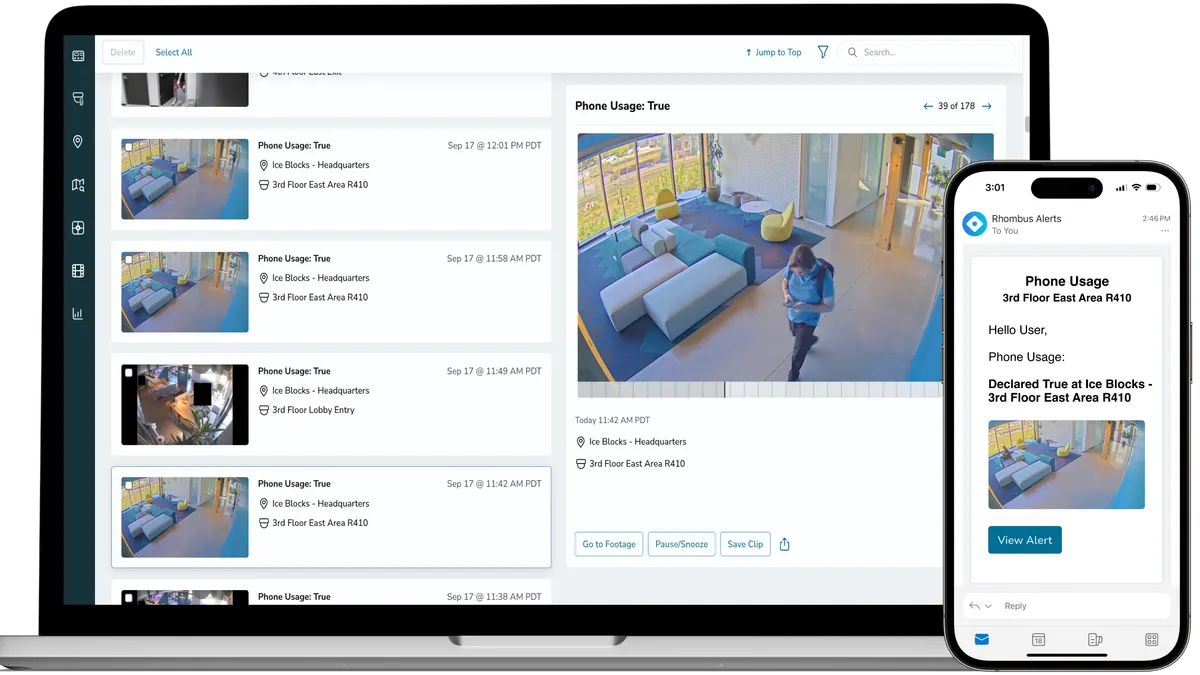
Offices that can’t verify who’s inside or detect threats as they unfold will lose the confidence of their workforce. If a breach happens, and companies can’t show they took reasonable steps to prevent it, they won’t just lose trust; they’ll face liability. As physical and digital threats converge, there will be a shift toward AI-powered security systems capable of anticipating danger, not just verifying identity. — Tina D’Agostin, CEO, Alcatraz
Healthcare in retail settings will further proliferate
“Retail-ization” of the medical industry will continue as organizations bring healthcare closer to the consumer. Ambulatory surgery facilities, urgent care clinics, micro-hospitals and treatment centers in retail locations will continue to see strong demand from an aging population, a technologically sensitive asset class and the transformation of the business philosophy of the medical industry. — Ross Yustein, chair, real estate, Kleinberg Kaplan
A lot of new entrants will come into the medical office market as it continues to grow as an asset class. More than 1 billion square feet of medical offices will be added in the top 50 markets. Occupiers will continue to face regulatory pressures as they roll out their delivery of care. — Bryan Johnson, healthcare leader, leasing, CBRE
Meeting skilled labor needs remains a concern
Organizations will drive demand for facilities with infrastructure to accommodate their AI-proficient workforce. That means having a secure server room with high-density cooling, physical security and acoustic privacy to protect voice AI. — Bob Kroon, CEO, August Berres Corp.
Facilities management as an industry will increasingly use digital, interactive, AI-supported training tools to attract and retain talent or risk losing out to other industries. The industries that build the smartest digital learning ecosystems will win the next generation of workers by teaching them in the language they already speak. — Kyle Spencer, director of NFPA LiNK, National Fire Protection Association
Companies will need to invest heavily in their current and future workforce to ensure they have the right number of people with the skills required in the future, as highly skilled workers will continue to be in short supply. If onshoring investment rises, this will further expand the competition for this talent. — Melissa DiMuro, chief people, culture and marketing officer, Limbach
Building preservation and upgrades will drive net-zero progress
Embodied carbon, circular material flows and adaptive reuse of existing building stock will become the most defensible financial strategy in 2026. Trends in insurance, permitting and material costs are all pointing the same direction: Preserve and upgrade what we already have. — Colin Mangham, director, corporate sustainability and innovation, U.S. Green Building Council California and Net Zero Accelerator
A key metric will drive contractor growth
In a trend important to service contractors, revenue per technician per labor hour will become the single most-watched KPI. It blends scheduling efficiency, pricing, sales follow-through and technician productivity into one number. As AI and workflow automation strip non-billable tasks out of a technician’s day, the contractors who rigorously track and optimize this metric will grow faster and command higher valuations. — William Chaney, CEO, ServiceTrade.
Editor's note: The spelling of Melissa DiMuro was corrected.