
Dive Brief:
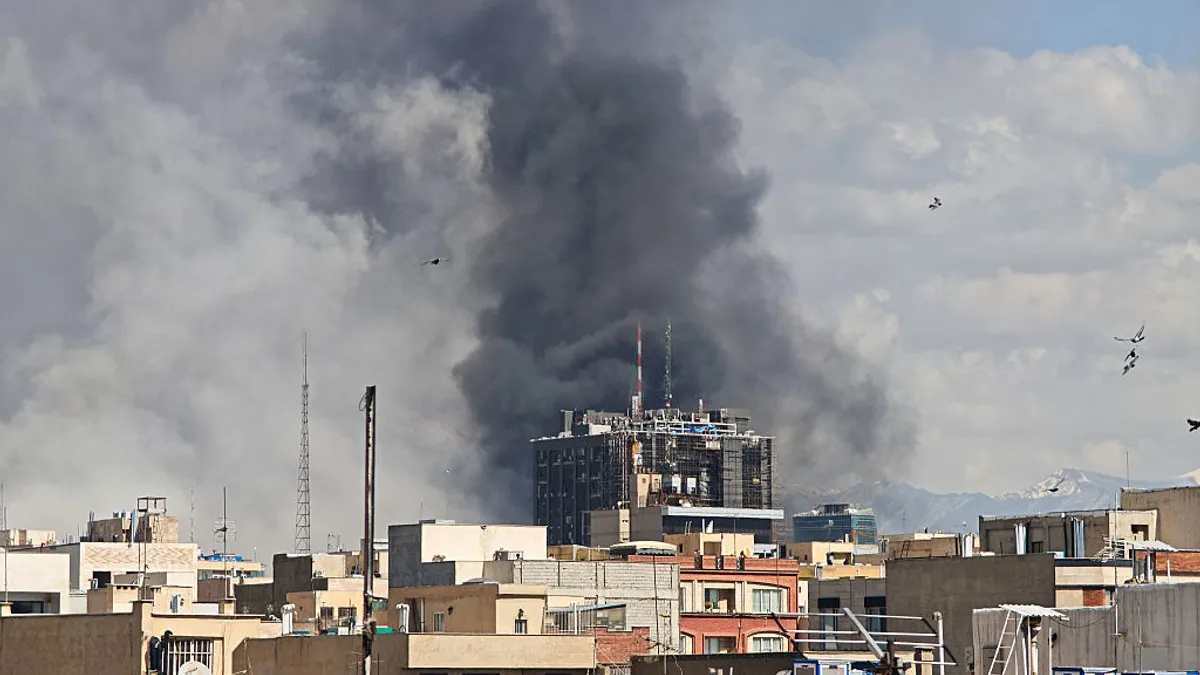
- The Iran war has provoked worries of slowing U.S. economic growth and a broad rise in prices as a near-total halt to oil shipments through the Strait of Hormuz briefly pushed up the price of crude oil on Monday to above $100.
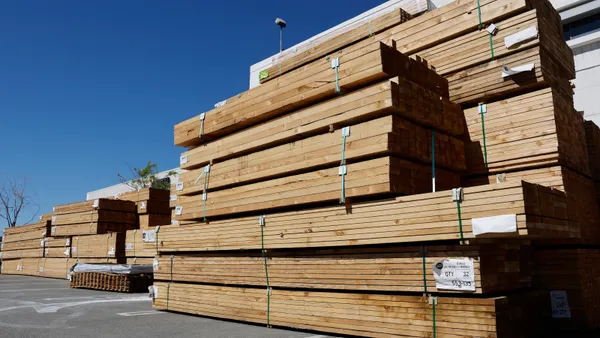
- Futures for Brent crude oil surged to as high as $117 per barrel on Monday before plunging below $100 after the Group of Seven pledged to tap oil reserves if necessary. The per-barrel price has gained more than 22% since the start of hostilities on Feb. 28. For facilities, the cost of materials for building repairs, renovations and new construction is impacted by energy fluctuations. Asphalt, adhesives, insulation, plastics and sealants, among other products, stem from petroleum products.
- "Higher oil prices will translate into higher construction input prices,” Anirban Basu, chief economist at Associated Builders and Contractors, told Facilities Dive in an email statement. “First, this will put upward pressure on shipping prices, making materials procurement more expensive. Second, diesel is a direct input to construction, and the fact that prices are at levels not seen since 2022 will meaningfully impact project costs."
Dive Insight:
U.S. consumers have felt the oil shock at the gas pump. The average price for a gallon of regular gas has jumped 16% during the past week to $3.48 from $2.99, AAA said Monday.
“This oil shock won’t end until ships can sail freely through the strait,” Ed Yardeni, president of Yardeni Research, said in a report. “Until then, the financial markets are likely to become increasingly concerned about a 1970s-style stagflation scenario,” he said, noting that “back then the period of stagflation included two recessions.”
Borrowing costs have also risen, with the yield on the benchmark 10-year Treasury note rising from 3.97% on Feb. 27 to 4.14% on Monday.
“We can’t rule out a bear market and even a recession,” Yardeni said. “It all depends on how long the Strait will be closed.”
The impact from a surge in oil prices will probably not set back the U.S. economy if it proves short lived, according to analysts with Bank of America Securities.
A big, sustained gain in energy prices could trigger an increase in delinquencies and weaker spending among lower income groups, and prompt a drop in U.S. equity prices, thereby curtailing spending by higher-income consumers, they said.
Persistently high energy prices could also compel large information technology companies to cut back on capital spending related to artificial intelligence, a leading driver for economic growth, the Bank of America Securities analysts said.
“In the near term, higher oil prices should keep the Fed firmly on hold,” they said. “But if energy prices start to weigh on final demand, the Fed would likely turn more doveish in the medium term.”
Traders in interest rate futures during the past week have increased the odds that the central bank at its June meeting will hold the benchmark interest rate at its current 3.5% to 3.75% level, raising the probability to 62.4% on Monday from 54.1% on March 2, according to CME Group’s FedWatch Tool.
During their January meeting, Federal Reserve officials held the main interest rate steady and, while noting a more favorable balance of risks between higher inflation and labor market weakness, signaled a continued wait-and-see stance on changes to borrowing costs.
At the same time, “several participants cautioned that easing policy further in the context of elevated inflation readings could be misinterpreted as implying diminished policymaker commitment to the 2% inflation objective, perhaps making higher inflation more entrenched,” according to minutes of the Jan. 27-28 meeting of policymakers.
The Fed seeks to hold inflation at 2% over the long term.
Last month, before the flaring of hostilities in the Middle East, consumer expectations of inflation were steady, the New York Fed said Monday.
Median expectations for inflation in 12 months fell 0.1 percentage point to 3% and, over the three- and five-year time horizons, held steady at 3%, the New York Fed said, reporting on survey results.
Editor’s note: Facilities Dive added a remark from Associated Builders and Contractors.