
Multiple states rang in the new year by enacting laws to update key recycling, organics and waste policies.
New laws will expand electronics recycling programs, establish extended producer responsibility for certain batteries and enact right-to-repair policies. New organics and landfill emissions laws are also in effect.
What new laws are affecting your area this year? Let us know at [email protected].
Vermont expands its battery EPR program
Vermont has extended its 2014 battery extended producer responsibility law to include rechargeable batteries, devices in which batteries are easily removable and some medium-format primary batteries. Vermont’s existing program covers household batteries.
The law also calls for including larger-format batteries that weigh between 4.4 and 25 pounds, such as those found in electric bikes.
Illinois establishes EPR for medium-format and portable batteries
The state will enact key parts of its EPR program for certain medium-format and portable batteries. Sellers and distributors must now have a battery recycling program in place that includes a plan for larger batteries for electric bikes and scooters along with portable batteries like those from small power tools. The program will require new battery collection points to be established throughout the state by the end of 2028. By 2029, batteries will need to include proper labeling to ensure collection and recycling.
Oregon expands EPR for electronics program
Oregon’s existing EPR program for electronics has expanded to include new items such as scanners, DVD players, VCRs, music players, game consoles, digital converter boxes, cable receivers, routers, modems and small servers. The program already accepts computers, monitors, TVs, printers, keyboards and mice.
Colorado enacts right-to-repair for consumer electronics
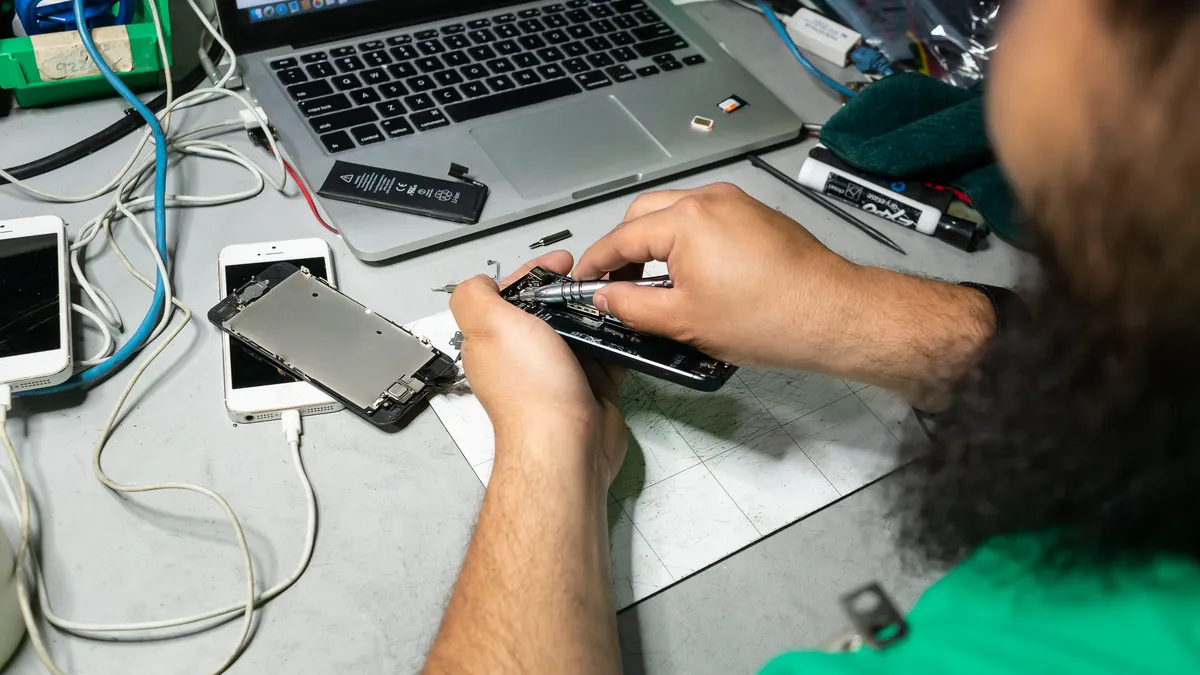
Colorado’s right-to-repair law for consumer electronics is now in effect. The law, which applies to most devices manufactured or sold after 2021, also bans parts pairing, a practice that ensures electronics can only operate with manufacturer-approved parts or software. The law also bans practices that prevent independent repair providers from “installing or enabling an otherwise functional replacement part” or display “misleading alerts or warnings about unidentified parts.”
Washington adopts right-to-repair for consumer electronics
Washington now has a right-to-repair law for consumer electronics including laptops, cellphones and home appliances. The law took effect in July, but it calls for manufacturers to provide wider access to parts, tools and information used to fix electronic devices starting Jan. 1, 2026. Most electronic products and parts that were manufactured, sold or used in Washington on or after July 1, 2021 are covered. Manufacturers are also restricted from using parts pairing.
New York organics diversion mandate expands
New York’s law pertaining to certain large generators of organic waste expanded at the start of the year. Businesses generating at least one ton per week rather than two tons per week are now required to divert their organic waste, provided they are within 25 miles of an organics recycler.
Covered facilities include supermarkets, restaurants, hotels, higher education institutions, correctional facilities and sports or entertainment venues. The law further ratchets down to include businesses generating a half ton per week of organic waste beginning in 2028.
New York landfills begin collecting emissions data
This is the first year landfills will be required to keep emissions data in compliance with New York’s Mandatory Greenhouse Gas Reporting Program. The program details were finalized in December, when officials described the data collection program as a counterweight to the federal government’s proposed rollback of reporting requirements.
Landfills generating 10,000 metric tons or more of carbon dioxide equivalent are covered under the program. They must report their emissions to the state’s Department of Environmental Conservation by June 1, 2027.
Other new laws of note
- Right-to-repair laws for wheelchairs are now in effect in Nevada and Oregon. Parts pairing is prohibited in both of these new laws.
- California added battery-embedded products to the state’s e-waste program. Consumers will now pay a disposal fee when they purchase such products.
- California updated its “buy recycled” law. State agencies must purchase recycled products whenever they are available at no more than a 10% higher total cost than non-recycled alternatives. Previously, agencies could purchase the recycled versions when they were available at the same or a lower total cost.