Agencies across the federal government are using energy performance contracts to make efficiency upgrades at facilities with little or no capital expense, according to the National Renewable Energy Laboratory, a division of the U.S. Department of Energy that was renamed the National Lab of the Rockies in December.
As happens in the private sector, agencies can enter into contracts with energy service companies, or ESCOs, to design, install and finance measures that are intended to pay for themselves over time. In the typical case, the ESCO guarantees the energy savings, using the money saved to pay for the project cost, reducing the financial risk.
With the federal government’s rollback of energy efficiency programs, working with ESCOs is a way to make needed upgrades without seeking budget funds or looking to Congress for appropriations, the NREL report says.
There are signs that ESCOs and agencies are increasing their work together. For example, GreenGen, an energy service company, recently hired retired U.S. Army Lt. Gen. Omar Jones IV to its advisory board, a move that marks a push by the company to build its public sector business.
“GreenGen is experiencing more public sector activity than ever before,” Brad Dockser, founder and CEO of GreenGen, said in a statement.
If they work with ESCOs, agencies must comply with numerous requirements. The Energy Act of 2020, for example, requires them to conduct what are called EISA 432 evaluations and implement measures that the evaluations identify. EISA stands for the Energy Independence and Security Act, a law enacted in 2007. The statute requires agencies to use performance contracting to address at least 50% of the energy conservation measures, or ECMs, that are identified.
In other requirements, the agencies must implement the ECMs within two years of the evaluation date and file reports on the efforts and their work under the contracts. They also face energy efficiency rules and cost thresholds for new construction and major renovations, among many others.
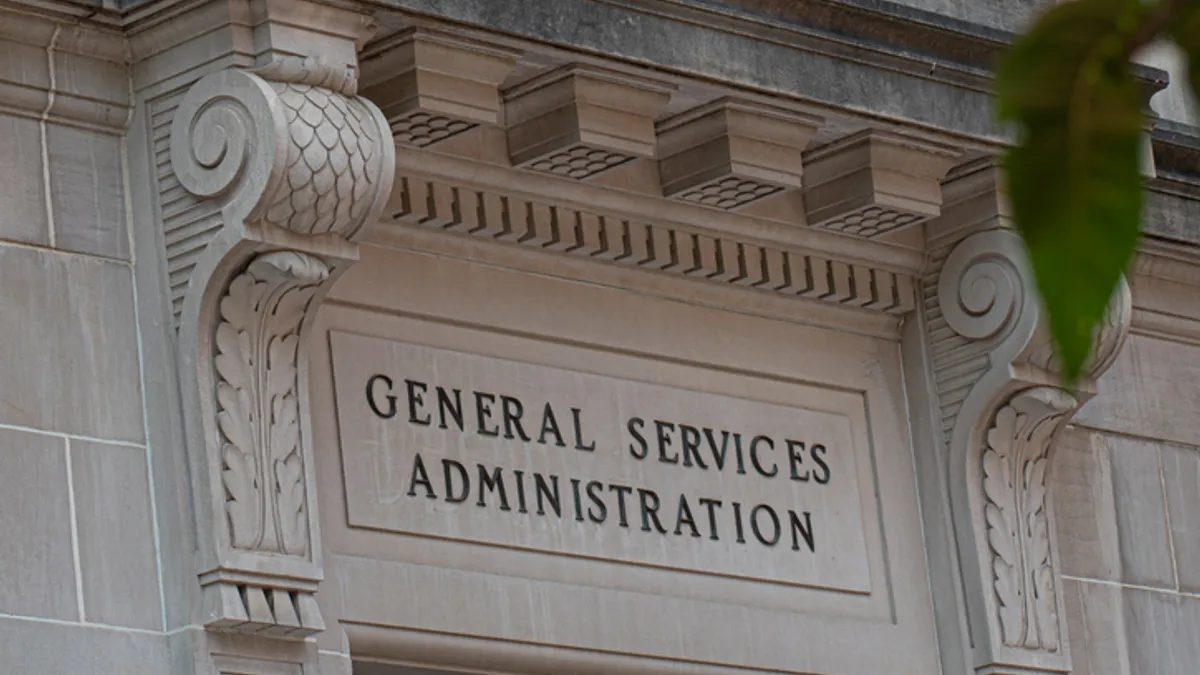
More engagement between agencies and energy service companies, or ESCOs, could be in the works. An update to Section 23 of the Federal Acquisition Regulation, released last year in October, encourages agencies to use the contracts to get work done.
“Agencies should make maximum use of the authority provided in the National Energy Conservation Policy Act … to use an energy savings performance contract (ESPC), when life-cycle cost-effective to reduce energy use and cost in the agency's facilities and operations,” the update says.
Agencies can contract with energy service companies for up to 25 years to improve energy efficiency at no direct cost to the U.S. Treasury, the update says.