AUSTIN, Texas — Facility managers and operators working to electrify buildings should ensure the building envelope is sound, keeping heat inside the building on cold days and outside when it is hot, an expert said this week in a panel at the ASHRAE Annual Conference.
“One of the biggest problems of existing buildings is they’re crappy,” said Jason Kliwinski, CEO and founder of the Green Building Center. “They’re bad building envelopes, and I don’t care what sophisticated mechanical systems [you have]. If you put it in a bad building envelope, it won’t perform.”
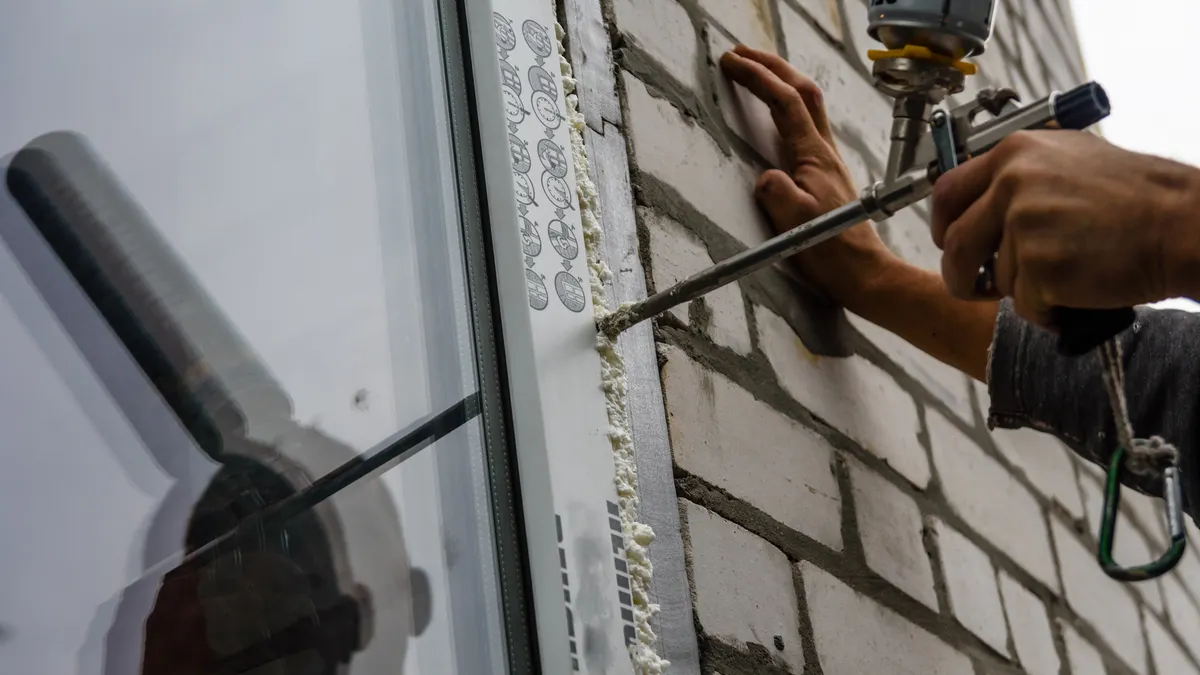
Building envelope improvements, including insulation, air sealing and window retrofits, are crucial first steps toward electrifying heating and cooling systems, especially for buildings in cold climates or those with high-efficiency fossil-fueled heating systems, according to a 2023 report by the American Council for an Energy-Efficient Economy.
Establishing a tight envelope is easier in new construction, Kliwinski said. For example, at a project at Rider University in New Jersey, his team had to electrify a new building on an existing campus to meet LEED Silver for $200 per square foot. His team was able to accomplish this despite limitations, including having to be built in nine months to meet the school-opening timeframe and the need to use packaged terminal air conditioners, or PTAC, he said.
“They’re all electric,” he said. “It’s what all their other dorms had, and they didn’t want to rock the boat with their maintenance staff and operations staff. So … how did we achieve that? If I do conventional construction with PTAC, there’s no way to meet LEED requirements, let alone anything else [we] wanted to do.”
His team accomplished the goal by changing the building envelope by using structural insulated panels, he said. By using the Energy Star-rated panels and PTAC, the team was able to deliver “a completely electric building on an existing campus that was 25% better than code, simply by changing the building envelope construction and making a much tighter, better insulated building,” he said. “Building envelope matters.”
But while harder to implement in existing buildings, an efficient building envelope yields significant results.
Modest weatherization measures such as air sealing and increasing the quality and thickness of attic insulation can reliably reduce energy use by 12% to 18%, per the ACEEE report. Deeper building retrofits that add insulation to walls, basements and rim joists and install higher-efficiency windows could deliver around 33% in energy savings, per the report.
Except in heavy process load buildings, like industrial facilities, building envelope retrofits can result in anywhere from a 10% to 40% reduction in loads, Kliwinski said. “It’s not as glamorous as a new building, [but] the most sustainable [building] is the one that’s never built,” he said. “Air sealing, weatherization, insulation and window replacements — they’re not glamorous, but that’s what makes existing buildings last another 150 years.”